Livelihood
HRDC data shows that many survivors are unable to secure their basic needs—food, shelter, healthcare, and family security. In such circumstances, rehabilitation centers face severe constraints in providing full support to survivors.
Did you know?
In Bangladesh, poverty and social exclusion make individuals and communities far more vulnerable to torture and other serious human rights violations. Poverty not only limits individuals from meeting their basic needs but also exposes them to heightened physical and psychological risks. Torture survivors in Bangladesh often struggle to regain employment, education, or livelihoods, leaving them trapped in cycles of poverty and social exclusion, which further intensify the trauma they have already endured.
HRDC data shows that many survivors are unable to secure their basic needs—food, shelter, healthcare, and family security. In such circumstances, rehabilitation centers face severe constraints in providing full support to survivors. Member and rehabilitation centers have long emphasized the need for a holistic approach to recovery. Psychosocial and medical services alone are insufficient; survivors also require social and economic support, including livelihood opportunities, skills development, and income generation, to ensure sustainable rehabilitation.
Torture survivors remain mothers, fathers, spouses, and family providers, often grappling with unemployment or physical and psychological disabilities directly caused by their experiences. In short, if survivors’ basic needs and socio-economic security are not addressed alongside rehabilitation services, their full recovery, dignity, and independence are unlikely to be achieved.
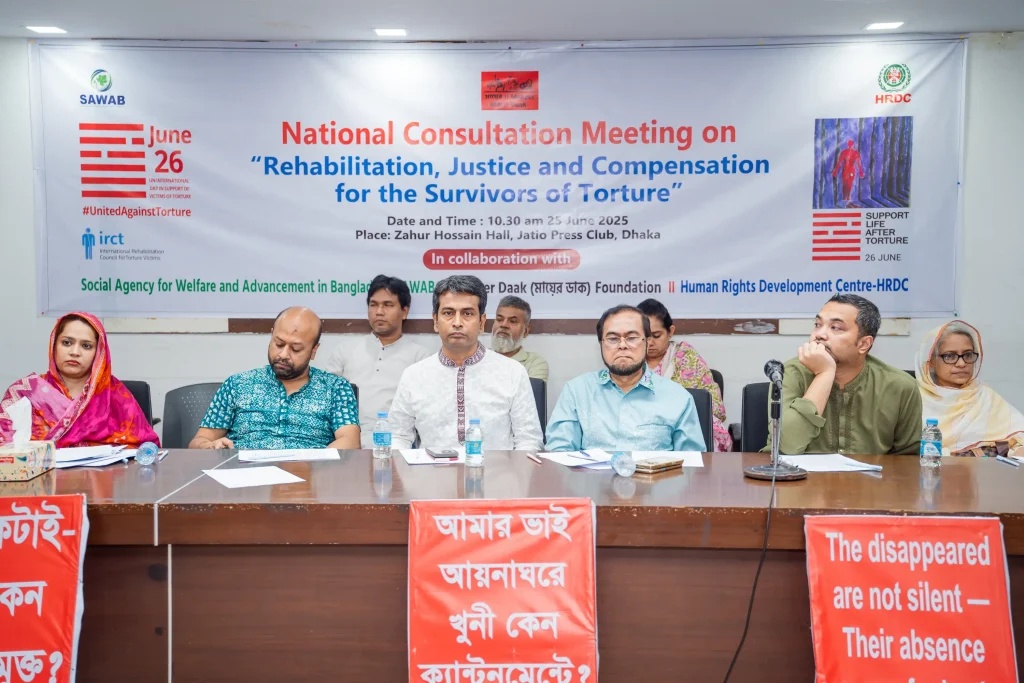
Our 5-Year Strategic Goals
Economic Empowerment
- Provide tailored skills development, vocational training, and income-generating opportunities for survivors.
- Support self-employment, small business development, and access to microfinance or grants.
Holistic Recovery Integration
- Ensure livelihood interventions are integrated with psychosocial, medical, and legal support.
- Strengthen collaboration between rehabilitation centers, community programs, and local employers.
Social Inclusion & Community Support
- Promote community-based initiatives to reduce stigma and social exclusion faced by survivors.
- Facilitate peer support networks and mentorship programs for survivors entering the workforce.
Advocacy & Policy Engagement
- Advocate with policymakers to create inclusive employment policies and social protection schemes for survivors.
- Highlight the connection between livelihood security and torture prevention.
Capacity Building for Centres & Partners
- Equip rehabilitation centres and HRDC partners with tools, training, and guidance to deliver sustainable livelihood programs.
- Provide monitoring and evaluation frameworks to ensure programs meet survivor needs and long-term impact.
Impact by 2031
- Survivors will have improved access to economic opportunities, social protection, and community support.
- Families of survivors will experience greater security and reduced vulnerability.
- HRDC and partners will establish a replicable model for holistic rehabilitation that combines medical, psychosocial, and economic recovery.