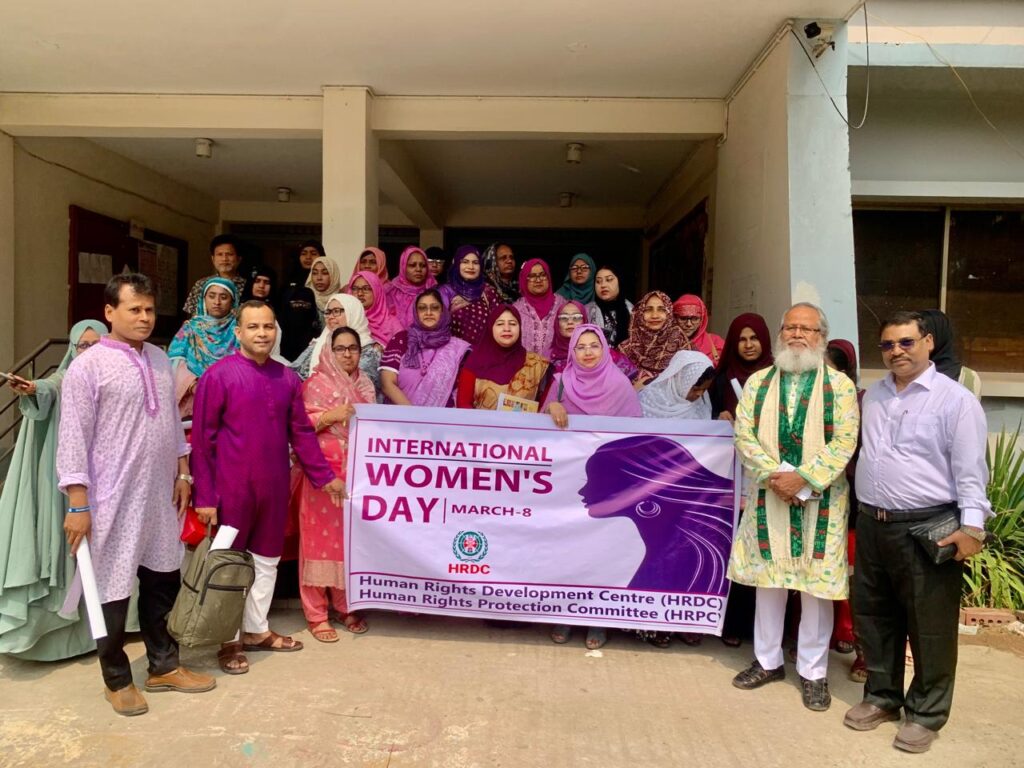
“While Women’s Day highlight the commitments of empowerment and dignity, the daily incidents of sexual violence reveals how far the commitments remain from reality.”
Women’s Day arrives each year with hopes of empowerment and dignity. Yet, from last Women’s Day to this one, the promises have repeatedly collapsed in the face of continuous sexual violence. Thousands of women and girls have been subjected to abuse, rape, and assault, mostly followed by silence and impunity. When women’s bodies become objects of violence and their suffering is normalized, Women’s Day becomes less a celebration and more a question: what is the actual significance of the promises?
Several reporting indicates that between last year’s Women’s Day and this year’s, a substantial number of women and girls in Bangladesh suffered sexual violence. Media analyses shows that minimum 700-800 women and girls were reported as victims of rape/gang rape during this period, with more than half being minors, also highlighting the vulnerability of adolescents girls. In addition to sexual assault, several cases involved attempted rape, abduction, and other forms of violence. Some incidents received public attention, but delays in justice and underreporting reveals that the true scale of violence is likely higher. These reports show the persistent gap between the promised legal protections in text and the actual situation faced by the women and girls in Bangladesh. Despite constitutional guarantees, criminal liabilities, and repeated policy based commitments, women continue to face sexual violence across homes, schools, workplaces and public spaces. Each act of violence not only violates bodily autonomy, but also reinforces social fear.
Bangladesh’s legal framework apparently safeguards women. The Constitution of Bangladesh guarantees equality before the law (Article 27), the right to life with dignity (Article 31), and protection from deprivation of life or personal liberty (Article 32). Under the Penal Code, 1860, Section 376 prescribes punishment for rape, while aggravated forms of sexual violence, including gang rape, attract more severe penalties under the Code. Furthermore, the Women and Children Repression Prevention Act, 2000 (Nari O Shishu Nirjatan Daman Ain, 2000) criminalizes rape, gang rape, abduction, and trafficking against women and children. The 2025 amendment strengthened penalties, introduced procedural safeguards to expedite investigations and trials, and enhanced protections for victims, though enforcement challenges remain. International human rights instruments reinforce these domestic obligations. The Convention on the Elimination of All Forms of Discrimination against Women obliges state parties to eliminate discrimination and violence against women. The Universal Declaration of Human Rights recognizes the inherent dignity and equal rights of all human beings, while the International Covenant on Economic, Social and Cultural Rights recognizes the right to the highest attainable standard of physical and mental health (Article 12). The Convention on the Rights of the Child provides additional protection for minors against all forms of abuse and exploitation. Yet, the persistent prevalence of sexual violence indicates a gap between formal guarantees and lived realities.
The incidents are not isolated. Violence against women remains one of the most pervasive human rights violations in the country. Survivors here face a dual injustice: the immediate violence and the aftermath of societal stigma. Concerns about social consequences lead many families to be silent. Judicial processes are often prolonged and survivor-hostile. In this context, rape is not merely a crime; it becomes a mechanism for silencing and controlling women. The psychological consequences of sexual violence are profound as survivors frequently endure anxiety, depression, post-traumatic stress disorder, social withdrawal, and self-blame, all of which undermine their capacity to participate fully in society. Despite the Mental Health Act, 2018, which acknowledges the rights of persons with mental health conditions, there is limited provision for gender-sensitive trauma care or psychosocial support for survivors of sexual violence. The absence of such services perpetuates violations of dignity and well-being long after the assault. However, meaningful change requires collective responsibility. The state must ensure the enforcement of existing laws, survivor-sensitive investigations, accessible mental health services, and community-based support mechanisms. Families and communities must reject victim-blaming narratives and support survivors’ recovery and rights.
Women’s Day, amid ongoing sexual violence, is a strong reminder that rights promised are denied in practice. Freedom from rape, access to justice, and the right to psychological recovery are inseparable from the broader promise of equality. Until sexual violence is treated not only as a criminal offence but as a systemic human rights violation with additional mental health and psychosocial consequences, the celebration of Women’s Day will remain fictitious, and its promises unfulfilled.
Author: Ritu Sen Gupta, a postgraduate in law and currently serving as the Monitoring, Evaluation, Accountability & Learning (MEAL) Officer and Research Head at the Human Rights Development Centre (HRDC), an organization integrating human rights with mental health and psychosocial support (MHPSS). She is dedicated to advancing human rights and promoting mental health and psychosocial care.